
Изхранване на детегледачката
18.01.2023
Games for kids!
The game is one of the most important ways through which childrenlearn. She supports formal learning later in childhood, but also givesthe opportunity of each child to develop his own value.
The game strengthens the concentration that is essentialimportance for the successful future of the adolescent person. She supports everything - fromlearning social interactions and norms, until the beginning of scientificthinking.
Find a babysitter here and now with us on Bavachki.bg .
The game is especially important for younger children!She's inthe basis of child development from the point of view of language, emotionalintelligence and regulation, creativity and intellectual thinking.
What is Game?
Before we think about which activities are best for supporting to children to learn, through the game, let's turn to this: what is the game?
The games must:
• Be fun and enjoyable;
• You have no goals set;
• Be spontaneous and voluntary;
• Active engagement is included;
• Includes an element of reflection.
Some activities, however, have more potential for a play,than others.The adult provides space, resources and time. Wewe call this “invitations to play” - and they relate now in our top 15 ranking.
1.Sand
The sand game is a fantastic opportunity for the basics ofscientific and development of self-esteem and physical development.Scooping, digging,pouring and sifting, teaching children how things work whilebuild muscles and coordination. This is about teamwork,sharing and social skills.
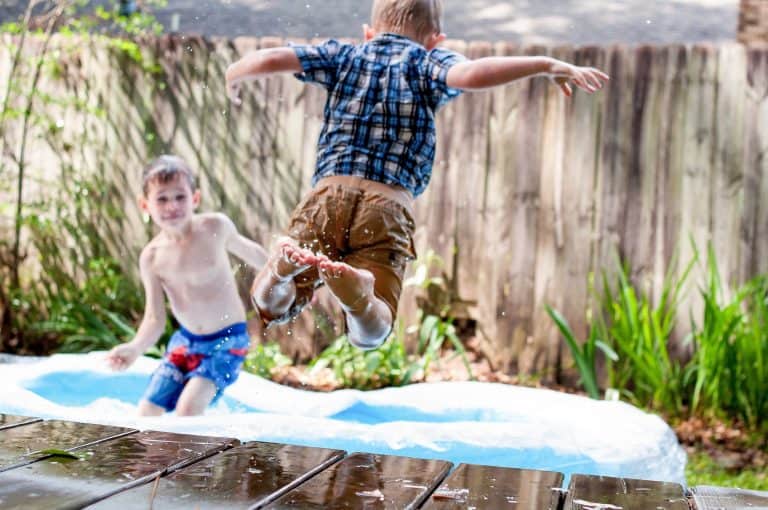
2.Water game
Like sand play, water play allowschildren to experiment in a safe environment with basic concepts such as volume.ExceptThis, the water game is great for training actions.
3. Games with plasticine
Plasteline looks elementary, but teaches children ofvery much. It has enormous potential at stake.Such strengthens the fingers of the little one,but also makes his lifelong preparation, teaches fine motor skills,creativity and coordination with hands and eyes.Add in the game a few beads for fine motor exercises, or make children strung beads along lengths on thin strips of plasticine, shaped like spaghetti.
4 Bindfold for role-playing
Let the children run wild with a bunch of clothes andprop. In a moment, you'll find doctors, veterinarians, a nurse,astronaut, chef or specialists. Let their imagination run wild. This helps for children to begin to make sense of the world of adults, roles and interests,as well as stimulate social interaction.Last but not least,dressing helps strengthen the aspects of self-care, which are fromessential for life in primary school.
5. Game with dolls
This is not just about the gingerbreaddolls. Here you can provide characters in the form of mini-figures that allow to children to develop their social game. This encourages imagination andthe expression (labeling) of feelings.
6.Drawing
When children draw on canvas, this allows them tofeel their world in a sensual way and develop self-expression, while at the sametime develop writing skills.Moreover, it is an invitation to learn more aboutcolors, mixing them and good antique stacking!
7.Puzzles & Constructors
It is played with blocks, puzzles and sorting shapes thatlay the foundations of spatial thinking, logical thinking,the arrangement and recognition of different shapes, sizes and colors.
8.Music, Dancing and Singing
Singing and music contribute greatly to development of language and forming the basis of literate skills, as well as the basicmathematical concepts like census.In addition, they begin to developrhythm, while improving their listening skills.Dancing helps to the child to develop strength, coordination and flexibility.
9.Imaginary game
All plays must be created with imagination, but we mean the type of game that naturally comes with a lot of kids.Leavetoddler with random selection of objects and will soon find them lost in one a world of reflection. It is essential to give time and space tothe child for imagination. This develops their imagination, which is important forliteracy skills and intellectual thinking.In addition, increasesself-esteem, as well as understanding the world around them, as well as the ability to copes with boredom.
10.Running, jumping, climbing, rocking
Young children increase their confidence, as well as developits sustainability through risk-taking.Of course, the huge motorskills also have a strong boost.
11.Game, in nature
Nature with all its beauty — birds and plants helps to children become more independent and inquisitive.
12.Sensory playback
In short, the sensory game is any gaming activitywhich includes touch, smell, taste, vision and hearing. It can be a plate fromjelly, water beads, ice, rice rainbow or even small baths.The sensory gamestimulates research and builds the blocks of science and research.
13.Basic board games
There are so many board games that are available, evenand for the youngest players.The latter should be perceived - not only because oftheir fun factor, but also for their learning potential. In addition to the themes fornumbers, colors, shapes and early phonetic games, these entertainments arevital to sharing children.
14.Cooking
Cooking and pretending cooking, serving or sellers and shoppers in stores are great scenarios for playing children.The cooking itselfcombines elements of sensory play, mathematical concepts, home safety and subsequent processes.Imagine that the shops for cooking, serving andtoys also teach basic mathematical ideas, as well as socialinteraction and how to be attentive to others.
15.Cardboard box
Yes, indeed!A modest cardboard box is one of the most amazing invitations to play. Whether it will be a house, a car, a home for the wholeFamily?Secure pieces of fabric, pillows, pencils and paper plates and themwatch how they explore their world.Get into their imagination and startyou think like an engineer.
We believe that your children deserve the best care. Therefore, the babysitter should be personally checked and chosen by our family bavachki.bg for your family.

